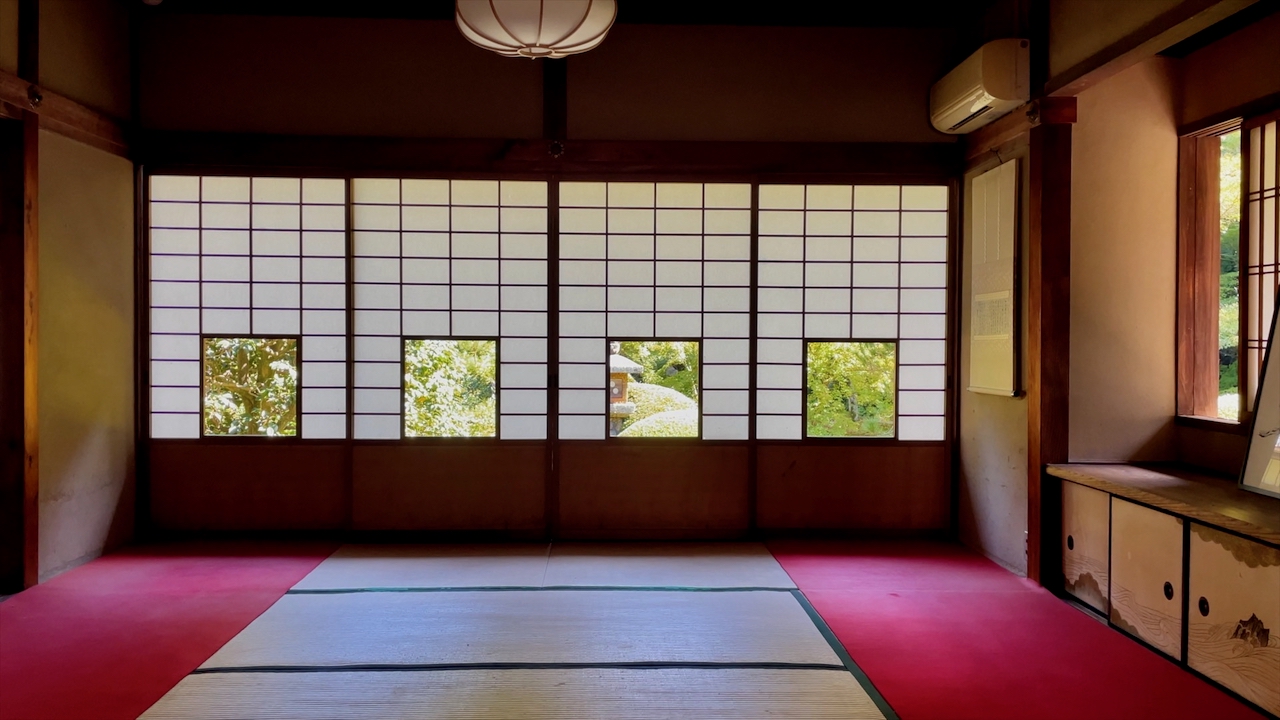
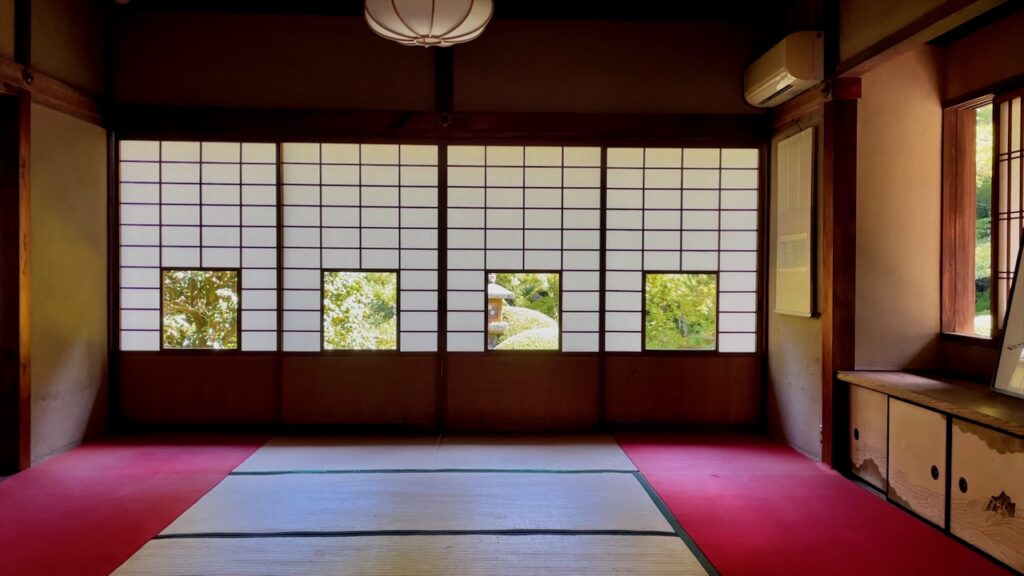
この一枚は雲龍院の**「色紙の窓(しきしのまど)」の室内側。四つの小窓が庭の景を“額装”し、畳の水平線→障子→四窓の順に視線を導く構図です。中央の窓には石灯籠と丸く刈り込まれた低木が入り、左右は常緑の葉が柔らかい前景となって奥行きをつくっています。室内は赤い縁(敷物)が画面下辺を締め、上部の行灯型の照明と柱梁が静かな対称性を補強。日本建築の「間(ま)」と光のグラデーション**が、外の鮮やかな緑と対比して、静けさを強く感じさせる写真です。
Four square “Shikishi” windows turn the same garden into four framed scenes. Tatami lines, pillars, and a touch of red anchor the room; at center, a stone lantern and rounded shrubs. The interior’s soft shade heightens the vivid greens outside—Unryu-in’s quiet sense of ma.

円窓の闇が自然な額となり、古木の枝と苔庭の明るさが際立つ。直線の障子と曲線の窓、動く枝と静まる円。雲龍院らしい「間(ま)」が、光の濃淡でそっと語りかける。
The dark rim of the round window becomes a natural frame. Bright branches and moss stand out, shoji lines meet the calm circle—light and shade speaking Unryu-in’s quiet ma.

手前いっぱいに広がる苔面がやわらかな起伏を作り、右手の雪見灯籠風の石灯籠と、その脇のギボウシの葉が光を受けて立ち上がる。奥は石積みの縁と常緑低木(ツバキ類)が背景のリズム。左から右下へ流れる木漏れ日のグラデーションが、苔の粒立ちと陰影を引き出し、雲龍院らしい静けさを保ったまま“呼吸する庭”を見せている。
A carpet of moss fills the foreground with gentle undulations. At right, a snow-viewing stone lantern and hosta leaves catch the light, while a stone edging and evergreen shrubs (camellia group) form the background rhythm. The diagonal dappled-light gradient enhances the moss texture and shadows, showing a “breathing” garden in Unryu-in’s quiet.

白砂に刻まれた放射状の稜線が、中心の石灯籠から“菊”の花弁のようにひろがる。斜光で陰が深まり、紋様の起伏が際立つ。雲龍院らしい端正さと象徴性が、最小の素材で最大の存在感を生む一景。
Radiating ridges in white gravel spread from the central stone lantern like chrysanthemum petals. Slant light deepens the shadows and heightens relief—an austere, emblematic scene where Unryu-in achieves presence with minimal means.
詳しくはyoutube動画をご覧ください。

コメント